How to Flatten a Cutting Board for Beginners Full Guide
Estimate Cost : 150 10
Time Needed : 2 hours
Inspect the cutting board
Lay the board on a truly flat surface (stone countertop, cast-iron table saw, or known-flat plywood).
Secure the cutting board
Stability prevents chasing problems. Place the board on a rubbery non-slip mat, router pad, or shelf liner to stop skating.
Start with coarse sanding (80-grit)
Begin with 80-grit to knock down the highs. Use a flat sanding block or a well-tuned random-orbital sander (ROS).
Use a hand plane to flatten (optional)
A sharp block or jack plane can speed flattening. Set a shallow cut and slightly camber the iron to avoid plane tracks.
Smooth with medium grit (120-grit)
Switch to 120-grit, apply a fresh pencil guide coat, and sand the entire board—not just problem areas—to avoid “waves.”
Final sanding for finish (220-grit)
Finish with 220-grit for a silky, food-safe surface. Use light pressure—let the abrasive cut.
Clean the dust off the cutting board
Vacuum thoroughly (brush attachment helps), then wipe with a barely damp microfiber cloth to lift remaining fines.
Apply food-safe finish
Warm a little mineral oil so it flows, then flood the surface and edges.
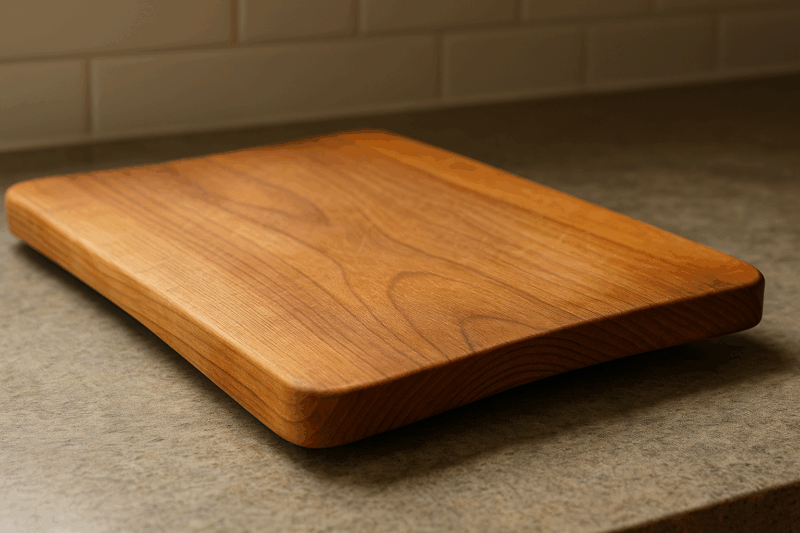
Cutting boards are the unsung heroes of every kitchen. Whether you’re chopping vegetables, slicing meat, or kneading dough, your board takes the beating. Over time, though, cutting boards warp, bow, or develop uneven surfaces. A warped board wobbles on the counter, becomes unsafe for knife work, and loses its clean look. The good news? Flattening a cutting board is easier than most beginners think.
See also: Why Did My Cutting Board Warp
In this comprehensive guide, we’ll show you exactly how to flatten a cutting board for beginners using simple tools, practical techniques, and budget-friendly options. By the end, you’ll have a safe, sturdy, and perfectly flat surface—ready for years of use.

Table of Contents
Why Cutting Boards Warp in the First Place
Before learning how to fix a warped board, it’s helpful to understand why it happens.
- Moisture imbalance – Cutting boards absorb water unevenly when not dried properly.
- Improper storage – Leaning against walls or leaving boards in damp areas encourages bowing.
- Heat exposure – Placing boards near stoves or dishwashers warps the wood fibers.
- Natural wood movement – Wood expands and contracts with humidity changes.
Knowing these causes helps prevent future warping once you’ve flattened your board.
Related: Best Food Safe Finish for cutting boards step by step
Tools and Materials You’ll Need
Here’s a beginner-friendly list of essentials. Most are inexpensive and already in a DIY toolkit.
Basic Tools
- Sandpaper sheets (80, 120, 220 grit) — 80 shapes/levels, 120 smooths, 220 preps for finish and between coats.
- Flat sanding block or orbital sander — Block keeps faces flat; orbital speeds sanding with fewer swirl marks.
- Pencil for marking high spots — Lightly shade surfaces to reveal lows/highs as you sand or plane.
- Straightedge ruler or level — Checks flatness and even thickness across boards and glue-ups.
Optional (For Faster Results)
- Hand plane (block or jack plane) — Quickly knocks down high spots and cleans edges, saving sanding time. See xpk02z review
- Belt sander or drum sander — Rapid thicknessing and flattening of large panels or rough stock.
Safety Gear
- Dust mask — Protects lungs from fine wood dust; aim for at least N95/P2.
- Safety glasses — Shields eyes from chips, dust, and flying grit.
- Ear protection — Reduces noise fatigue from sanders and other power tools.
Finishing Materials
- Food-safe mineral oil — Easy, non-rancid penetrating finish; ideal for kitchen projects.
- Beeswax (optional for sealing) — Mix with oil for added water resistance and a soft satin sheen.
- Clean lint-free cloth — Applies and buffs oils/wax without leaving fibers behind.
Related: Sell your products on Etsy guide
Step-by-Step Guide: How to Flatten a Cutting Board
Step 1: Inspect the cutting board
Lay the board on a truly flat surface (stone countertop, cast-iron table saw, or known-flat plywood). Use a straightedge or level across the length, width, and diagonals to spot cup, bow, or twist. Rock the straightedge gently; note any daylight gaps. Shade the top face with a light pencil “guide coat,” then slide the straightedge to reveal high spots (pencil rubs off) and lows (pencil remains). Mark problem areas with circles/arrows. If you have winding sticks, sight across the ends to check for twist. Take a quick moisture reading if possible; an overly wet board may move again after flattening.
Step 2: Secure the cutting board
Stability prevents chasing problems. Place the board on a rubbery non-slip mat, router pad, or shelf liner to stop skating. For maximum control, clamp the board to your bench using cauls or scrap “protectors” so clamps don’t bruise edges. If you use bench dogs or holdfasts, keep pressure even and avoid flexing the board out of flat. Confirm nothing rocks before you start. Keep cords clear if using power sanders. Put on dust mask, safety glasses, and ear protection now—coarse sanding and planing kick up chips and noise fast. A stable setup lets tools cut cleanly and predictably.
Step 3: Start with coarse sanding (80-grit)
Begin with 80-grit to knock down the highs. Use a flat sanding block or a well-tuned random-orbital sander (ROS). Make overlapping passes, light pressure, and keep the tool moving to avoid divots. On stubborn crowns, take a few diagonal passes, then finish with the grain for a clean scratch pattern. Re-apply a pencil guide coat as needed to track progress—when the pencil disappears evenly, you’re close to flat. For large boards, a belt sander saves time: use two hands, keep it level, and feather off at edges to avoid rounding. Vacuum between passes so dust doesn’t clog paper or mask problems.
Step 4: Use a hand plane to flatten (optional)
A sharp block or jack plane can speed flattening. Set a shallow cut and slightly camber the iron to avoid plane tracks. Skew the plane (angled strokes) to slice fibers more easily and reduce tear-out. Work from the highest areas toward the lows, checking often with the straightedge. Read the grain; if fibers lift, reverse direction or switch to finer cuts. Waxing the plane sole improves glide and control. Stop planing as soon as the surface is generally flat, then return to sanding—planes get you close quickly, but sanding blends and refines. Practice on scrap first if you’re new.
Step 5: Smooth with medium grit (120-grit)
Now blend and true the whole surface so overall thickness stays consistent. Switch to 120-grit, apply a fresh pencil guide coat, and sand the entire board—not just problem areas—to avoid “waves.” Keep edges crisp by staying flat; if needed, lightly ease the arrises with a couple of gentle passes to prevent splinters. Check flatness again with the straightedge. For end-grain boards, expect slower progress and more frequent paper changes. Measure thickness at a few points with calipers or a ruler to confirm even removal. Vacuum dust often; a clean surface tells the truth about where you still need work.
Step 6: Final sanding for finish (220-grit)
Finish with 220-grit for a silky, food-safe surface. Use light pressure—let the abrasive cut. For end grain or premium feel, a quick pass at 320-grit is optional. To chase micro-fuzz, lightly dampen the surface to raise the grain, let it dry, then give a brief kiss-sand with 220. Run fingertips across the board; it should feel uniformly smooth with no ridges or dish-outs. Inspect under raking light (phone flashlight works) to spot swirl marks or scratches. If you see any, step back to 120 or 150 briefly, then return to 220. Thorough prep makes finishing effortless.
Step 7: Clean the dust off the cutting board
Dust dulls finishes and telegraphs imperfections. Vacuum thoroughly (brush attachment helps), then wipe with a barely damp microfiber cloth to lift remaining fines. Let the board dry fully—moisture can block oil absorption and make the surface feel rough. For a final check, wipe with mineral spirits or denatured alcohol; this temporarily “previews” color and highlights lingering scratches without raising grain. Inspect both faces and edges. Ensure there’s no slurry in corners or pores. Set the board on stickers (small spacers) so air circulates evenly while it dries, minimizing the chance of new cup or warp before finishing.
Step 8: Apply food-safe finish
Warm a little mineral oil so it flows, then flood the surface and edges. Massage it in with a lint-free cloth, adding more until areas stop “thirsting.” Let it soak for several hours—or overnight—then wipe off excess. Repeat if dry spots reappear. For extra protection and a soft sheen, buff a beeswax + mineral oil blend after the oiling step; work it in with small circles and hand-buff to finish. Coat both faces to balance moisture. Maintenance: re-oil whenever the board looks pale or feels dry (often monthly). Never put a board in the dishwasher; wash, dry, and store upright.
Preventing Future Warping Of Cutting Board
Once flattened, you’ll want to keep your cutting board in shape:
- Always dry thoroughly after washing.
- Store flat, never leaning upright.
- Re-oil monthly or after heavy use.
- Avoid soaking in water or dishwashers.
- Keep away from direct sunlight or stovetop heat.
Cutting Board Flattening Budget Variations for Beginners
Flattening a cutting board doesn’t have to break the bank. Here are cost-tier options:
Low-Budget ($10–$20):
- Sandpaper, sanding block, and mineral oil.
- Great for first-time DIYers.
Mid-Budget ($50–$100):
- Add a small orbital sander and block plane.
- Saves time, provides smoother results.
Higher Budget ($150+):
- Invest in a drum sander or jointer if you plan to flatten multiple boards or build cutting boards regularly.
Common Mistakes Beginners Make When Flattening Cutting Board
- Sanding too aggressively in one spot → uneven thickness.
- Skipping grits → scratch marks remain visible.
- Not checking flatness often → over-sanding one side.
- Using non-food-safe oils → can turn rancid or unsafe.
Avoiding these mistakes ensures your board not only looks professional but lasts longer.
Alternative DIY Methods to Flatten a Cutting Board
Steam & Clamp Method
For minor warps, dampen the concave side, place it between two flat boards, and clamp overnight. Works best for thin cutting boards.
Hot Water Soak + Press
Carefully soak the warped side, then press flat under heavy weights (like books). This is less precise than sanding but can fix light bowing.
When to Replace Instead of Repair
Sometimes, flattening isn’t worth the effort. Replace your board if:
- It’s cracked or split deeply.
- It has mold or permanent stains.
- It’s warped beyond ¼ inch.
At this point, investing in a new quality cutting board is safer.
FAQ on How to Flatten a Cutting Board for Beginners
Can you flatten a cutting board without power tools?
Yes, with sandpaper, a sanding block, and patience.
What is the best oil for cutting boards?
Food-grade mineral oil is best. Avoid vegetable oils.
How often should I oil my cutting board?
At least once a month, or whenever the wood looks dry.
Can bamboo cutting boards be flattened?
Yes, but bamboo is harder. Use sharp tools and extra time.
How long does it take to flatten a cutting board?
Anywhere from 30 minutes (with power tools) to a few hours by hand.
Conclusion on how to flatten a cutting board for beginners
Flattening a cutting board might sound intimidating, but it’s a beginner-friendly woodworking and kitchen maintenance skill. With the right tools, patience, and a little sanding, you can transform a wobbly, uneven board back into a smooth, safe surface.
Whether you’re using sandpaper on a budget or investing in power tools for speed, the steps remain simple: inspect, sand, smooth, and refinish.
Take care of your cutting board today, and it will take care of your cooking tomorrow.
Best wishes,
Alexander.


Leave a Reply
You must be logged in to post a comment.